Achieved Microsoft Secure Score levels above 90% across client environments.
Improve cyber resilience practically without enterprise overhead.
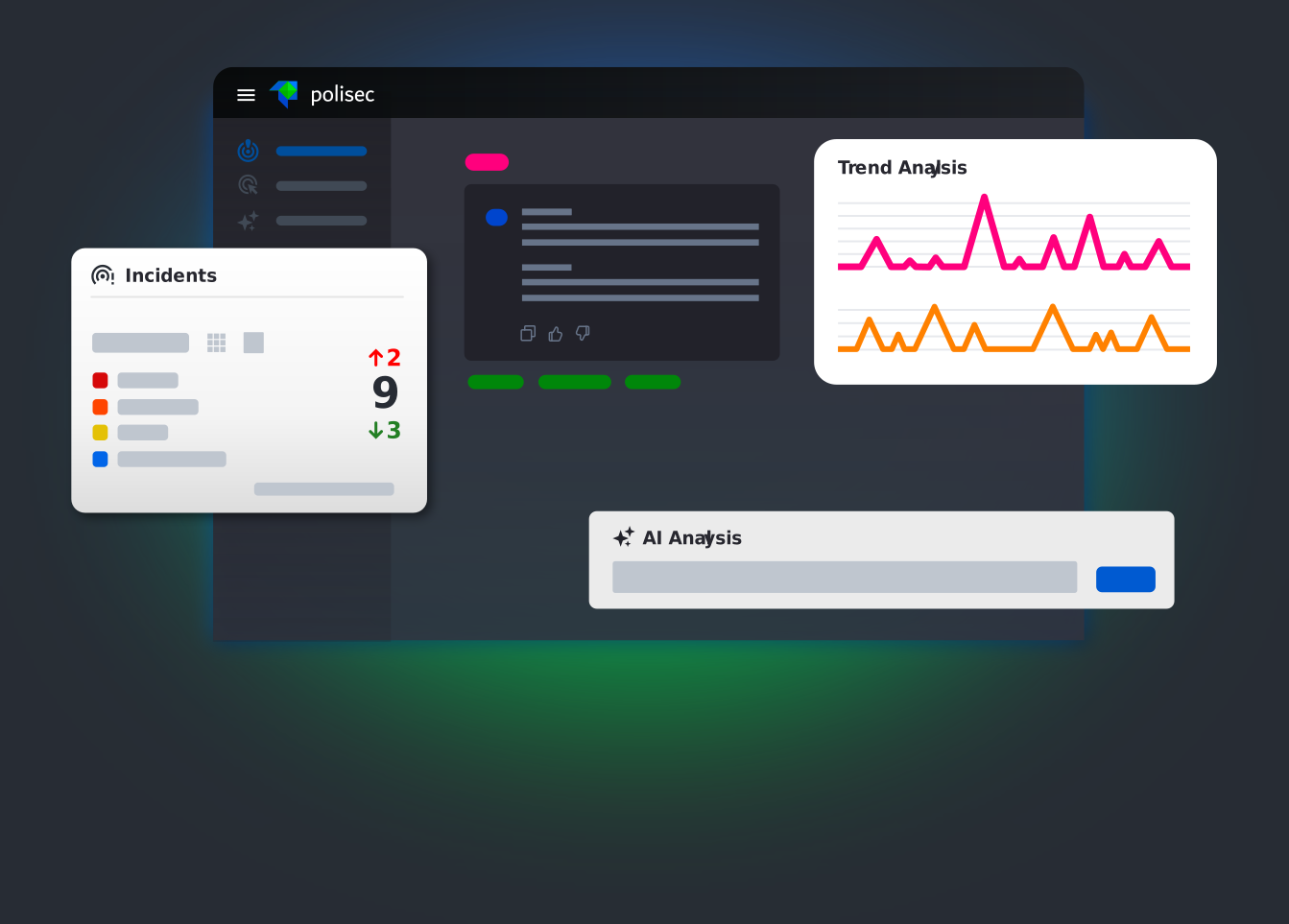
AI Cyber Security combines Microsoft security platforms with AI-assisted analysis to deliver stronger visibility, response, governance, and cost-effective protection. The focus is practical uplift for SMEs that need disciplined operations without unnecessary complexity.
A strong fit for Microsoft-based organisations needing better security outcomes.
SMEs using Microsoft 365 that need stronger cyber security without enterprise complexity or enterprise operating cost.
Financial services and wealth management firms with stronger compliance expectations and lower tolerance for weak controls.
Organisations without internal cyber security capability that still need ongoing security operations and governance.
Businesses that want to get more value from existing Microsoft security investments.
What this service model is designed to improve.
Stronger posture
Improve security posture and risk visibility quickly across Microsoft-centric environments.
Continuous response
Use AI-assisted analysis to support ongoing monitoring, triage, and incident response.
Governance confidence
Strengthen compliance alignment, reporting, and executive oversight.
Better economics
Adopt flexible security operating models that improve resilience without unnecessary overhead.
Broader protection
Protect both traditional IT systems and emerging AI environments through one operating model.
Four connected service lines for security uplift and governance.
Cyber Risk Assessment and Strategy
Assessment of cyber and AI-related risks with a clear, prioritised strategy aligned to business and compliance needs.
Technical and governance security assessment
Microsoft Secure Score evaluation and optimisation planning
AI-specific risk assessment including data exposure and model risks
Gap analysis against standards such as ISO 27001/27002, NIST, and POPIA
Executive-level reporting, prioritisation, and remediation roadmap
Microsoft Security Platform Deployment
Implementation and optimisation of the Microsoft Defender ecosystem for integrated protection.
Defender for Endpoint, Office 365, Identity, and Cloud Apps deployment
Microsoft Sentinel integration for SIEM and SOAR use cases
Identity protection and Conditional Access policy configuration
Email security hardening with SPF, DKIM, DMARC, and MTA-STS
Secure baselines, tuning, and false positive reduction
Managed Detection and Response
Ongoing monitoring and response using AI-assisted analysis with a flexible cost model.
Continuous monitoring with flexible coverage approaches
AI-assisted alert triage and prioritisation
Incident investigation and response workflows
Automated playbooks and threat intelligence integration
Monthly reporting, trend analysis, and ongoing tuning
vCISO and vCTO Services
Executive-level cyber security and technology leadership delivered as an ongoing service.
Monthly governance and strategy sessions
Cyber risk register development and management
Policy refinement and compliance alignment
AI governance, incident planning, and tabletop support
Third-party risk review and AI-assisted security research
Signals that shape the AI Cyber Security offer today.
Strong experience in financial services and regulated sectors.
Deep integration with Microsoft Defender and Sentinel ecosystems.
Cross-region delivery capability across South Africa and Australia.
Questions that usually come up early in the discussion.